Fire safety is not something any business can afford to ignore. A proper fire risk assessment protects lives, property, operations, and reputation. Whether you run a small office, a warehouse, a residential block, or a large commercial site, understanding your legal duties and practical responsibilities is essential.
This detailed guide explains everything you need to know about a fire risk assessment, including legal requirements, the assessment process, costs, common compliance failures, and how to build a strong fire safety culture within your organization.
Why Every Business Needs a Fire Risk Assessment
A fire risk assessment is a structured review of your premises to identify fire hazards, evaluate risk levels, and put suitable fire safety measures in place. It is more than a checklist. It is a legal duty and a practical step that protects people and assets.
Legal Compliance
In the United Kingdom, businesses must carry out a fire safety risk assessment under fire safety law. The responsible person, often the employer, owner, or managing agent, must ensure that a suitable and sufficient fire risk assessment is completed and reviewed regularly.
Failure to comply can lead to enforcement notices, prosecution, heavy fines, and in serious cases, imprisonment. Fire authorities have the power to inspect premises and request documented evidence of your fire risk assessment.
Protecting Lives
The main purpose of a fire risk assessment is to identify fire hazards and protect people at risk. This includes employees, visitors, customers, contractors, and vulnerable persons such as those with limited mobility. Identifying people at risk and planning safe evacuation routes can save lives in an emergency.
Protecting Property and Business Continuity
A fire can destroy stock, equipment, records, and buildings within minutes. Businesses without proper fire prevention measures often struggle to recover after a serious incident. A detailed fire risk assessment helps reduce downtime and protect long term operations.
Insurance and Reputation
Many insurers expect proof of a current fire risk assessment. Failure to maintain proper fire safety management can affect claims. In addition, businesses that neglect fire safety risk damaging their public image and customer trust.
A comprehensive fire risk assessment for businesses is not just about legal compliance. It is about responsible leadership.
What Happens During a Fire Risk Assessment
Many business owners ask, how to do a fire risk assessment correctly? While each premises is different, the process usually follows five essential steps.
Step 1 Identify Fire Hazards
The first stage of a fire risk assessment involves identifying potential fire hazards. These include:
- Ignition sources such as electrical equipment, heaters, cooking appliances
- Fuel sources such as paper, packaging, furniture, flammable liquids
- Oxygen sources including ventilation systems and stored oxygen cylinders
Special attention should also be given to modern fire risks. Lithium ion batteries, charging stations, and server rooms can create hidden hazards that many businesses overlook.
Step 2 Identify People at Risk
This stage focuses on identifying people at risk in the event of a fire. Consider:
- Employees working regular hours
- Night staff or lone workers
- Visitors and customers
- Contractors
- Persons with disabilities
- Residents in rental properties or HMOs
Understanding who may need assistance during evacuation is a key part of a detailed fire risk assessment process.
Step 3 Evaluate and Reduce Risk
After identifying hazards and people at risk, the next stage is risk evaluation. This involves assessing the likelihood of a fire starting and the potential consequences.
Fire safety measures may include:
- Installing fire detection and alarm systems
- Providing suitable fire extinguishers
- Maintaining clear escape routes
- Improving signage and emergency lighting
- Implementing safe storage procedures
The goal is to remove fire hazards where possible and reduce remaining risks to an acceptable level.
Step 4 Record Findings and Action Plan
A written fire risk assessment is required for most businesses. The report should include:
- Identified hazards
- People at risk
- Existing control measures
- Further actions required
- Responsible persons and deadlines
Recording findings creates accountability and ensures improvements are tracked.
Step 5 Review and Update Regularly
A fire risk assessment must not be a one time exercise. It should be reviewed:
- Annually
- After structural changes
- After significant changes in staff or processes
- Following an incident or near miss
Regular review ensures your fire risk assessment remains suitable and sufficient.
Our Fire Risk Assessment Methodology
Professional assessors follow a structured and transparent approach. A comprehensive fire risk assessment includes both inspection and documentation.
On Site Inspection
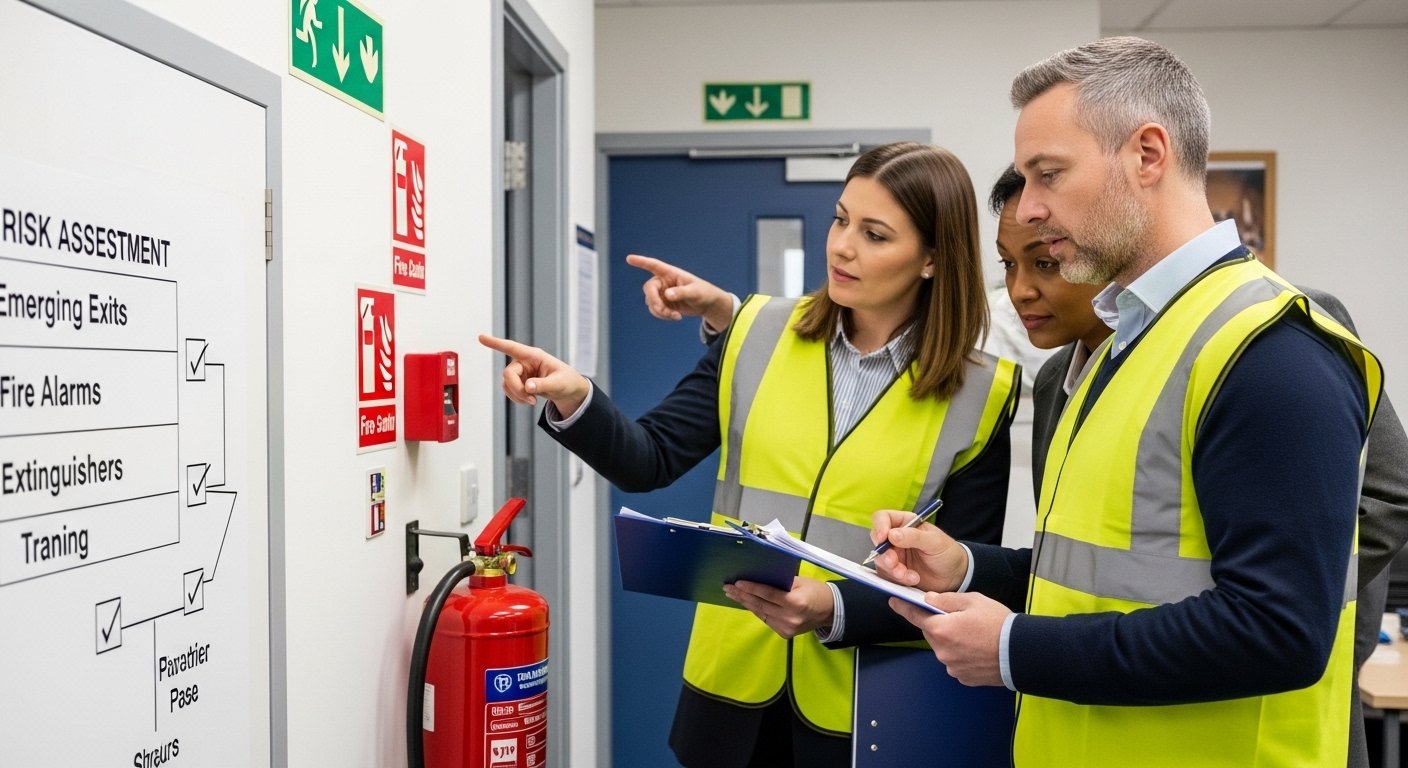
A qualified assessor will physically inspect the premises. This includes examining escape routes, alarm systems, fire doors, electrical installations, storage areas, and housekeeping standards.
Photographic evidence is often included in a comprehensive fire risk assessment to clearly highlight hazards and support recommendations.
Risk Rating Matrix
A clear risk rating system helps prioritise actions. Each hazard is assessed based on likelihood and impact. This provides a practical framework for decision making and budgeting.
Detailed Reporting
A professional fire risk assessment report typically includes:
- Executive summary
- Legal compliance checklist
- Risk evaluation table
- Prioritised action plan
- Review schedule
Some providers offer digital reporting systems that allow businesses to monitor compliance in real time and track actions easily.
Types of Premises We Cover
Fire risk assessment requirements vary depending on the nature of the premises. A tailored approach is essential.
Offices
Office environments often contain electrical equipment, paper storage, and open plan layouts. Escape routes and fire alarm testing are key focus areas.
Industrial Units and Warehouses
Warehouses present higher fire loads due to stored goods and packaging. A fire risk assessment for businesses in this sector must carefully evaluate storage height, access routes, and sprinkler systems.
Residential Blocks and HMOs
Landlords must ensure common areas are covered by a suitable fire risk assessment. Escape routes, signage, and emergency lighting are critical.
Retail and Hospitality
Retail stores and restaurants have high footfall. Identifying people at risk during peak hours and planning crowd evacuation procedures are essential parts of the fire safety risk assessment.
Schools and Healthcare Settings
Vulnerable occupants require additional planning. Personal emergency evacuation plans are often necessary.
High Rise and Mixed Use Buildings
Complex structures require a detailed fire risk assessment process that considers shared access areas and different occupancy types.
What Is Included in Your Fire Risk Assessment Report
A comprehensive fire risk assessment report is more than a simple checklist.
It should include:
- Full property details
- Hazard identification findings
- Fire safety measures currently in place
- Gaps in compliance
- Clear recommendations
- Timescales for action
- Review date
A written fire risk assessment requirement ensures that findings are documented properly. Clear documentation also supports inspections by fire authorities.
How Often Should a Fire Risk Assessment Be Reviewed
One of the most common questions is how often should a fire risk assessment be reviewed.
Best practice suggests:
- At least once every 12 months
- Immediately after changes to layout
- After introducing new equipment
- Following changes in occupancy
- After a fire incident
Regular review is essential to maintain compliance and ensure ongoing fire prevention measures remain effective.
Fire Risk Assessment Cost Guide
Cost is an important factor for many businesses. Fire risk assessment cost varies depending on:
- Size of premises
- Complexity of operations
- Number of floors
- Location
- Level of documentation required
Small offices may incur modest fees, while large industrial facilities require more detailed inspections.
While some businesses consider completing their own fire risk assessment checklist, hiring a competent assessor provides assurance that the process is thorough and compliant.
When comparing costs, consider the potential financial impact of non compliance. Fines, business closure, and reputational damage often far exceed the cost of a professional assessment.
Common Compliance Failures We Identify
During inspections, certain issues frequently appear.
Blocked Escape Routes
Storage in corridors or stairwells can seriously obstruct evacuation.
Inadequate Fire Signage
Poor or missing signage makes evacuation confusing during emergencies.
Poor Maintenance Records
Failure to maintain alarms, extinguishers, and emergency lighting undermines fire safety management.
Outdated Risk Assessments
An outdated fire risk assessment does not reflect current risks.
Lack of Staff Training
Employees must understand evacuation procedures and basic fire safety measures.
Identifying and correcting these issues strengthens overall compliance.
Beyond Compliance Building a Fire Safety Culture
A fire risk assessment is only one part of effective fire safety management. Building a strong safety culture improves long term protection.
Staff Training
Regular fire safety training ensures employees understand hazards and evacuation routes.
Fire Drills
Routine drills test evacuation procedures and highlight weaknesses.
Leadership Commitment
Senior management should actively support fire prevention measures and allocate resources for improvements.
Clear Communication
Posting evacuation plans and maintaining open communication improves confidence and preparedness.
A positive safety culture reduces the likelihood of incidents and supports the findings of your fire risk assessment.
Integration With Wider Safety Strategy
Many organizations integrate their fire risk assessment into a broader health and safety framework.
This may include:
- Linking findings to risk registers
- Aligning with occupational health and safety standards
- Including fire safety in internal audits
- Reviewing performance annually
Integration strengthens accountability and ensures fire safety remains a priority.
Case Study Example
Consider a medium sized warehouse that requested a comprehensive fire risk assessment.
The inspection identified:
- Overloaded electrical sockets
- Blocked rear exit
- Expired fire extinguisher servicing
- Inadequate signage
After implementing the recommended fire safety measures, the business reduced risk ratings significantly and achieved full compliance during a follow up inspection.
This demonstrates how a proactive fire risk assessment can deliver measurable improvements.
Get Your Fire Risk Assessment Today
A professional fire risk assessment provides clarity, compliance, and confidence. It identifies hazards, protects people at risk, and strengthens your fire safety management framework.
Whether you operate a small office, a large warehouse, or a mixed use building, investing in a comprehensive fire risk assessment is a responsible and strategic decision.
Do not wait for an inspection or an incident. Take action now, review your current fire risk assessment, and ensure your business remains safe, compliant, and prepared.
If you would like, I can now provide:
- SEO meta tags with character counts
- Internal linking strategy
- Keyword density breakdown
- Schema markup for ranking improvement
- Conversion focused call to action refinement
Frequently Asked Questions
Q1. Can I Complete My Own Fire Risk Assessment?
Yes, if you are competent and understand fire safety principles. However, many businesses prefer using trained professionals to ensure a detailed fire risk assessment process.
Q2. Is a Fire Risk Assessment Required for Small Businesses?
Yes. Even small premises must complete a suitable fire safety risk assessment.
Q3. How Long Does a Fire Risk Assessment Take?
Time depends on property size and complexity. Small offices may take a few hours, while larger premises may require a full day or more.
Q4. What Happens If I Fail a Fire Inspection?
Authorities may issue enforcement notices requiring improvements within a set period. Serious breaches can lead to prosecution.